

Data is still pending to satisfy the questions asked at the public meeting last night concerning the recent environmental regulatory actions filed against Butala Sand and Gravel. Tabetha Lynch of the Environmental Protection Agency (EPA) confirmed that “so far” samples tested in the area in question have not shown harmful levels of contaminants, but that they have only received 5-10% of the data.
Lynch, along with representatives from the Colorado Department of Health and Environment (CDPHE) and the Division of Reclamation, Mining and Safety (DRMS) initiated the meeting at the Poncha Springs Town Hall last night after several community members reached out with concerns about the regulatory actions.
Butala Sand and Gravel sits on and around Smeltertown, a historic industrial area that handled lead-zinc smelting and wood-treating operations. Smeltertown was deemed a Superfund site in the 1980s after soil pollutants including creosote, lead, zinc, copper, and arsenic were detected from over a century of mining and industrial use.
Gravel excavation has taken place on the area well before environmental regulations were in effect. Butala now has restrictions about where they can and cannot excavate around contaminated areas. Recent violations of those restrictions necessitated a cease and desist order this past July.
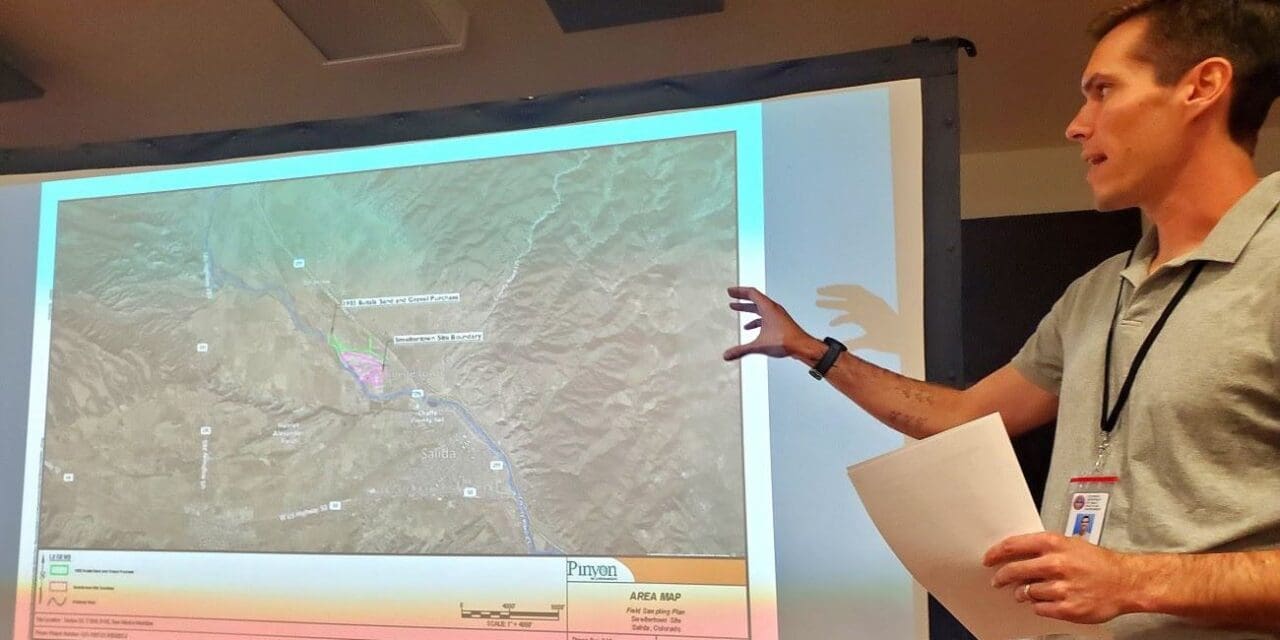
During the presentation by the government agencies last night, maps were shared that demonstrated the location of Butala’s breach of permitting where a sensitive area containing mostly the contaminant creosote, used in past wood treatment operations, was disturbed.
Testing is being conducted on soil and ground water to determine how much of the contaminant was moved. Butala is doing this testing as required by the EPA and other agencies through an environmental contractor. Those particular results should be available in about a month, said CDPHE representative Alex Hedgepath.
Going forward, it was shared that further testing, especially for vulnerable groundwater, will happen by government agencies quarterly for two years. When asked why the process takes so long, Hedgepath stated that because of creosote’s thick consistency, it is slow moving so it is important to test throughout the year during different seasons to gain accurate results.
In response to concerns that contaminants have affected the surrounding residential area, Lynch said there was no evidence of that right now, however, if residents recently purchased materials from Butala, Hedgepath suggested getting that material tested and pointed to looking up resources for that online. Other precautions Butala must take to protect the public are being implemented such as more fencing, cautionary signage and thorough environmental hazard training of its staff.
In response to questions about the history of contaminants at the site, Hedgepath directed residents to their department websites where each governmental agency has links to past testing reports in document repositories that are available to the public. Those links were not available during the meeting. Hedgepath encouraged participants at the meeting to reach out with questions over email:
For EPA questions contact Tabetha Lynch at